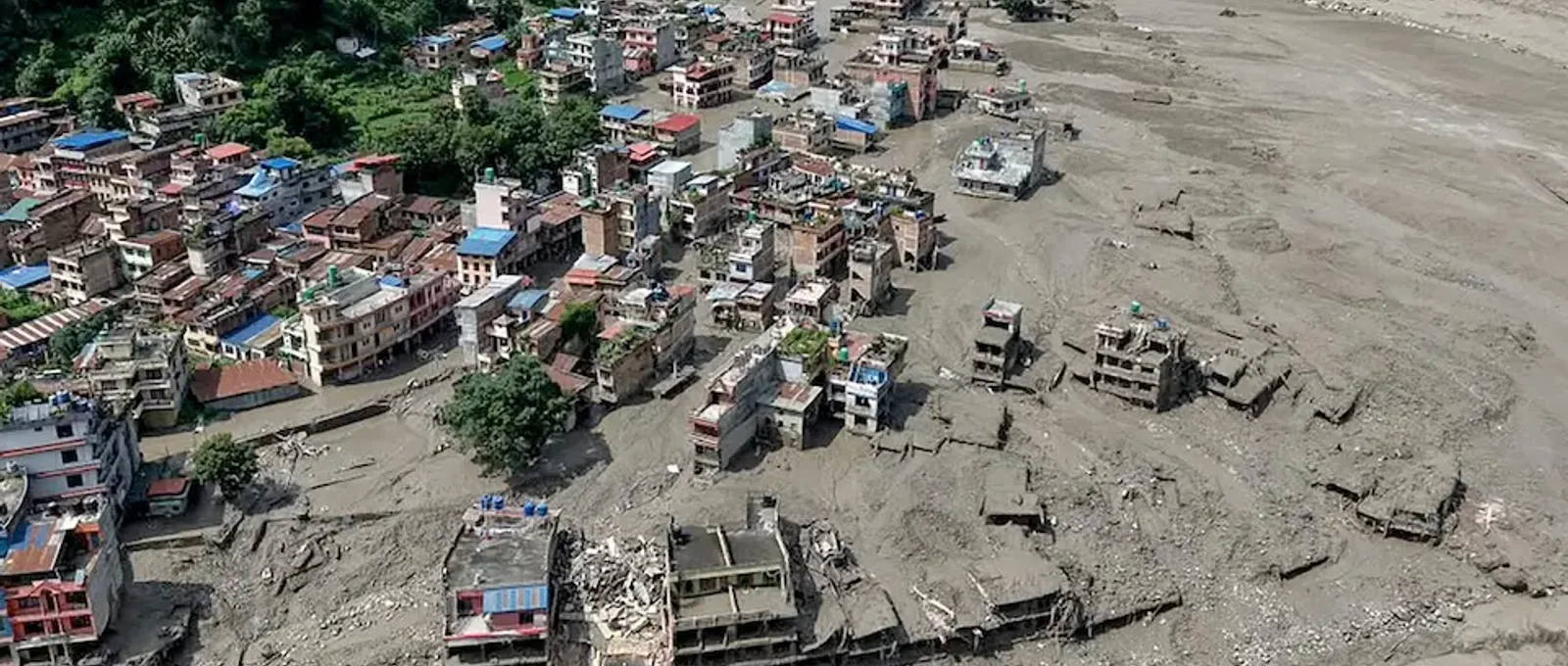

On the morning of Wednesday, August 26, 2026, a wall of water, mud, and rock tore down the Bhote Koshi valley in northern Nepal, sweeping away homes, bridges, and entire stretches of road in a matter of minutes. Flooding began around 8:40 a.m., affecting riverside areas in Rasuwa, Nuwakot, Dhading, Gorkha and other districts.
How it happened
Scientists now believe the disaster was triggered by a massive glacier collapse and debris flow that registered as a magnitude 5.2 landslide, according to the U.S. Geological Survey. The USGS originally pinpointed the cause as a 4.4 magnitude earthquake but later updated its analysis after observing data from nearby seismic stations and satellite imagery, which suggested no earthquake had occurred. The location was near the Nepal–China border, about 55 km northwest of Kodari. The torrent of water, mud and debris tore through steep mountain valleys and hit villages like "liquid cement." A second landslide occurred about three hours after the first, and river channels are likely blocked by debris, forming dams that could burst. Experts note the Himalayan region is warming faster than the rest of the world, thawing permafrost and destabilizing slopes.
Who is affected
The death toll has climbed to more than 360 people, according to local police, with rescue teams searching for more than 1,400 people who went missing. Many of them were foreigners and pilgrims. An estimated 10,000 households need immediate relief, according to the UN humanitarian agency OCHA, with entire settlements, markets, roads, bridges, and hydropower infrastructure swept away or damaged. Those hit include local communities, tourists, pilgrims, traders, transport workers, hydropower workers, and military and government personnel.
What everyone is doing
Nepal's response has been swift and united. The Ministry of Finance has allocated NRs 20 billion for immediate disaster response through the Prime Minister's Disaster Relief Fund. National emergency responders are leading search and rescue operations, especially along the Bhote Koshi River in Timure, Syaphrubesi and Rasuwagadhi. Helicopters are evacuating the injured, and Nepal Police has begun posting lists of missing Nepali and foreign nationals. The IFRC released emergency funding so the Nepal Red Cross could act immediately, Save the Children is on the ground in Rasuwa with emergency aid for 1,000 families, and UNICEF is working with the government to deliver emergency health care, nutrition, safe water, and medical tents. Countries and international organisations have begun providing relief supplies, medicines and financial support.
The challenges are real. With roads blocked or flooded, traffic congestion is slowing relief, and many areas remain without electricity, internet or mobile connectivity. Ordinary Nepalis have responded with remarkable generosity, traveling toward affected areas to help.
What should be done and how to help
The government has implemented a "one-door system" to streamline the collection and distribution of relief, prevent irregularities, and ensure swift delivery to victims. Individuals and organisations are urged to contribute to the Prime Minister's Natural Disaster Relief Fund, with bank account details published for donations. Nepali embassies abroad are coordinating contributions from the diaspora, and trusted organizations like the Nepal Red Cross, UNICEF, Save the Children, and GlobalGiving are accepting donations.
Longer term, this tragedy is a reminder of the need for early warning systems on glacial rivers, safer settlement planning, and global action on climate change. For now, the priority is simple: find the missing, shelter the displaced, and stand with Nepal.