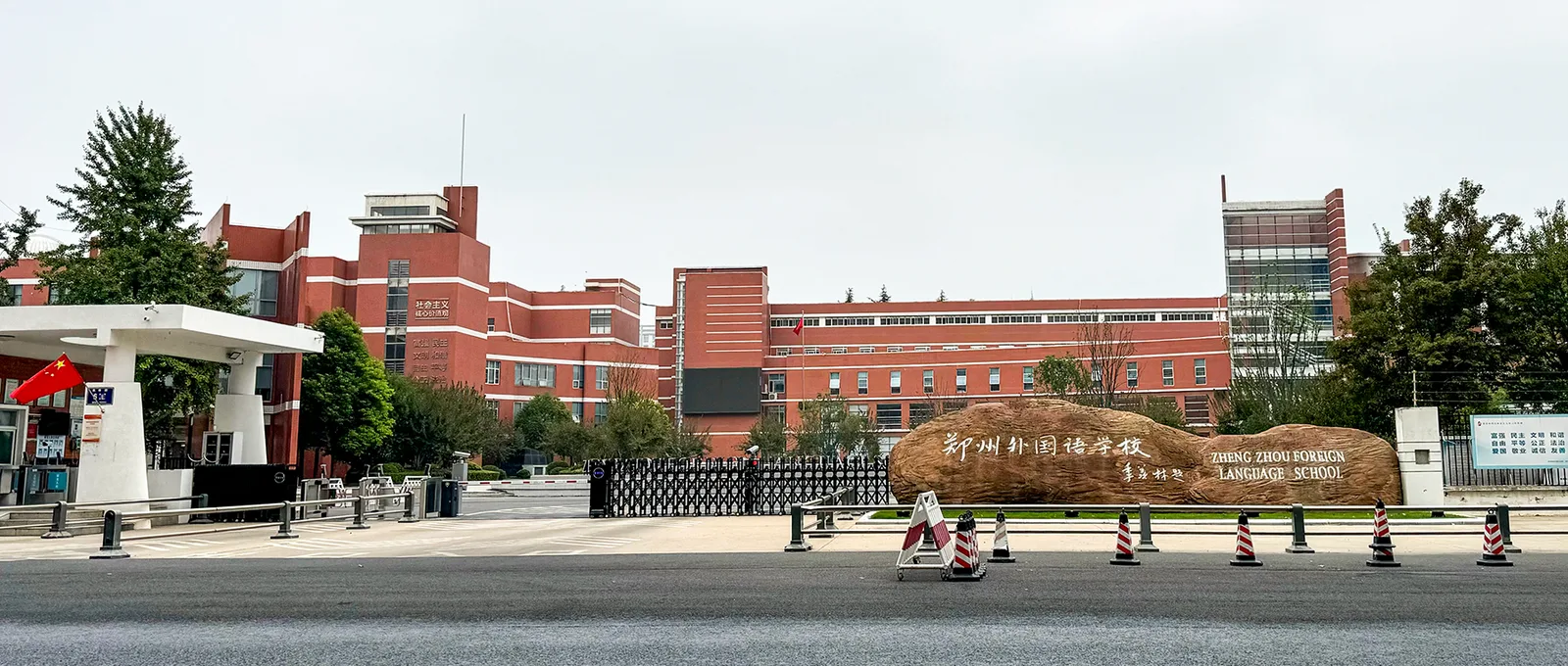
We had eleven children in class four this year. The room has fifty desks in it because it was built in 1974 for fifty children, by people who had carried the idea of a school out of Tibet along with everything else, and who were not being optimistic — they filled it.
Two families left for Minnesota in March. One for Switzerland in June, to an uncle. The mother told me before she told the office, which I appreciated, and she cried, and then she said the thing that everybody says, which is that there is nothing here for them.
She is right. That is what makes this hard to write.
The exile school system is, I think without exaggeration, the most successful institution this community has built. It taught Tibetan to three generations of children born outside Tibet. It produced a literate readership in a language that had every reason to become oral and then to vanish. Whatever else was lost, the schools held the line on the thing that a people cannot be reassembled without, and they did it with no state, no tax base, and buildings like this one.
And they are emptying, and the reason is that the individually correct decision for every single family is to leave.
Consider what a family in this town actually faces. Employment here is a shop, a hotel job in season, a taxi, or the community's own institutions, which cannot expand. Legal status in India is a category that has improved and is still not citizenship for most. A child who does well in our school goes to college and then confronts the same list. Meanwhile a resettlement route exists, and a cousin is already there, and in Minnesota there is work and a passport and schools with heating.
No family has ever been wrong to take it. I want to state that flatly because there is a register of speech in our community that treats leaving as a failure of commitment, and it is spoken mostly by people whose own position is secure, and I have heard it in a room where a woman was being made to feel ashamed of getting her children out of poverty.
So the calculation is correct at every household and the aggregate is that the institution built to preserve the language empties into countries where the language cannot be maintained.
It cannot be maintained there, and this is not pessimism, it is arithmetic. Tibetan in Minnesota is a Saturday. It is two hours a week against forty hours of English, with no monastery, no shopkeeper who speaks it, no bus conductor, no playground. The community there works extraordinarily hard at those Saturdays and I have met the people who run them and they are not sentimental amateurs. A Saturday is a Saturday. The children of the families who left in March will understand their mother and will not argue with their own children in Tibetan.
Here, in this half-empty building, they would have. That is the whole of what the school does that the Saturday cannot: it makes the language the medium of ordinary, boring, non-cultural life — of arithmetic, of being told off, of gossip in a corridor.
I have no proposal. I have thought about this for eleven years and I do not have one, and I distrust anybody who does, because every proposal I have heard is either a request that families sacrifice their children's prospects for a collective good, which is obscene, or a plan to fund the Saturdays better, which is doing the achievable thing rather than the necessary one, and I have signed the funding letters for it myself.
What I have instead is a practice, and it is small. I teach the eleven as though there were fifty. Same syllabus, same standard, same expectation. I have been advised, gently, twice, to adjust to the reality of the numbers.
The desks stay. I have been asked about that too — the room could be partitioned, there is a use for the space — and I have said no both times, and I am aware that this is sentimentality rather than pedagogy. But a child in a room with forty empty desks is being told something true about where she is, and she will remember the room, and I would rather she remember it accurately than comfortably.

A Saturday is a Saturday. That is the arithmetic and it is the thing the funding letters cannot fix, and I have signed them too.
I sign them and I do not think they are useless. I think they are the achievable thing and I would rather say that plainly than pretend.