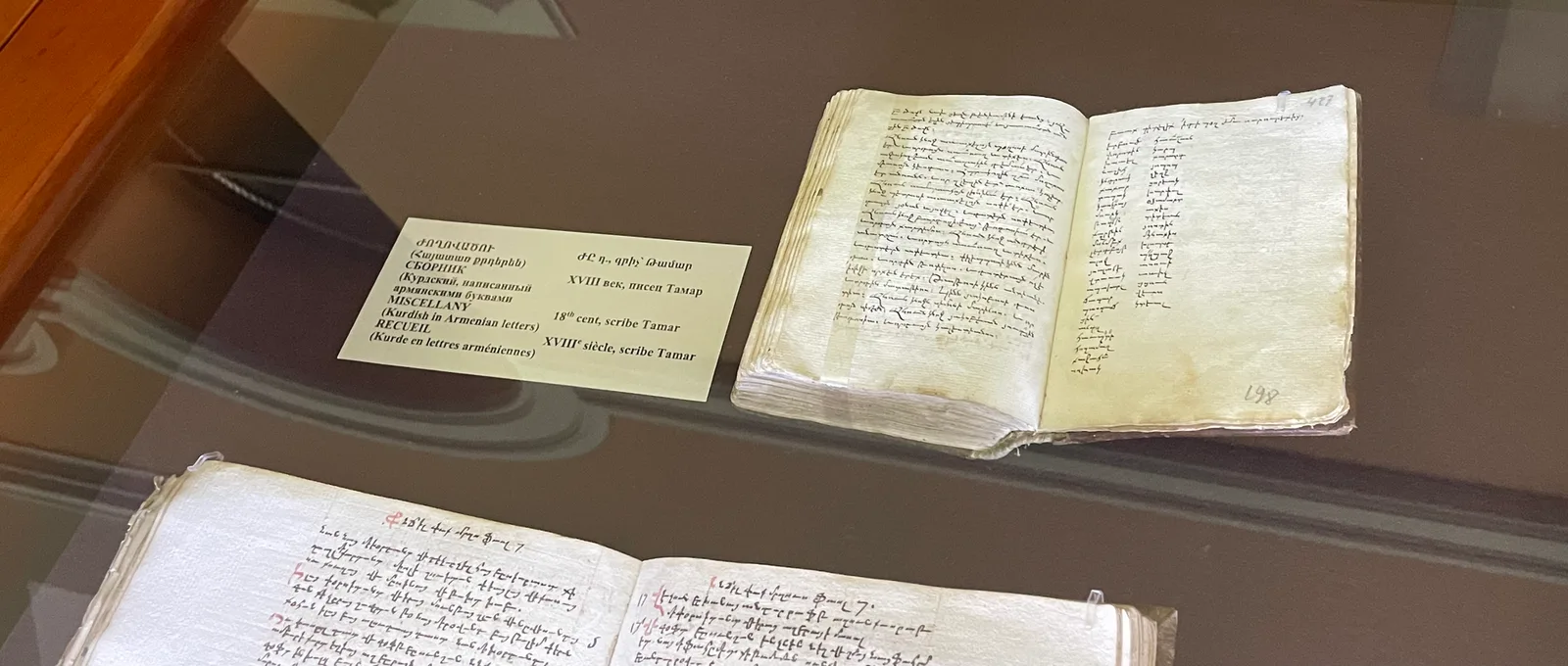
The bookshop in McLeod Ganj has a shelf of Tibetan writing and about nine tenths of it is in English. Memoirs, mostly. Two novels. A collection of essays that I have taught from. All by Tibetans, all about Tibetans, all in a language that a Tibetan reader in Amdo cannot read and that my own mother cannot read.
The Tibetan-language shelf is lower down and is largely religious, plus a dictionary, plus one novel published in Dharamsala in an edition of, I was told by the man who printed it, eight hundred copies.
There is a version of this observation that is an accusation and I want to set it aside first, because it is the version that gets made and it is lazy. The accusation is that writing in English is a betrayal — that a literature in the coloniser's language, or the market's language, is not the literature of a people. I have heard it at conferences from people who delivered the accusation in English.
The arithmetic defeats it before the ethics get a turn. Who reads Tibetan literary prose? Not the monastic readership, in the main, whose reading is elsewhere. Not the young in exile, who are schooled in English and Hindi and whose Tibetan is fluent and oral. Some readers inside Tibet, where distribution of a Dharamsala imprint is not a thing that happens. What remains is a readership of, at a generous estimate, a few thousand people spread across four countries with no distribution network connecting any two of them.
A novelist who writes in Tibetan is choosing eight hundred copies and no reviewers. That is not a moral failing on anybody's part. It is a market with no infrastructure, and infrastructure is what a literature runs on — publishers who pay advances, editors who develop a manuscript over two years, critics whose disapproval means something, prizes, bookshops, a second novel.
So the English-language Tibetan book is not a compromise with the market. It is the only configuration in which a Tibetan writer can be edited properly, paid, argued with in print, and read by more than a village.
What I want to say is what that costs, and it is not the thing the accusation names.
It is not that the language is lost in the writing — a good writer carries a great deal across, and the two novels on that shelf both do things to English syntax that only somebody thinking in Tibetan would do. What is lost is the audience's argument. A literature develops by its readers disagreeing with it. When the readership is overwhelmingly foreign, the disagreements that reach the writer are foreign disagreements: about pacing, about how much context a reader needs, about whether the political material is too much or not enough. Those are real editorial questions and they are not the questions a Tibetan reader would ask, which are about whether the family is right, whether the monastery is right, whether that is how an uncle speaks.
A writer shapes the next book against the objections they hear. Ours hear the wrong ones — not wrong in themselves, wrong in the sense of coming from outside the thing being described — and there is no mechanism by which the other objections get made, because the people who would make them are not reading it.
The counterweight, which I have watched happen and which keeps me from despair about this, is translation back. Two of the memoirs have been translated into Tibetan, badly and unofficially, and circulated in ways I am not going to describe in print. I have been told by somebody who would know that one of them is argued about in exactly the terms I said were missing — the family, the uncle — and argued about with some heat.
So the objections exist. They are arriving four years late, through a channel nobody planned, in a translation the author has not seen and cannot correct, and they do not reach her.
I asked the man who printed the eight hundred copies whether he would do another. He said he had about three hundred left and that a second one was not a business question, and then he said that he had sold eleven copies to one person, who was taking them somewhere, and that he had not asked where.