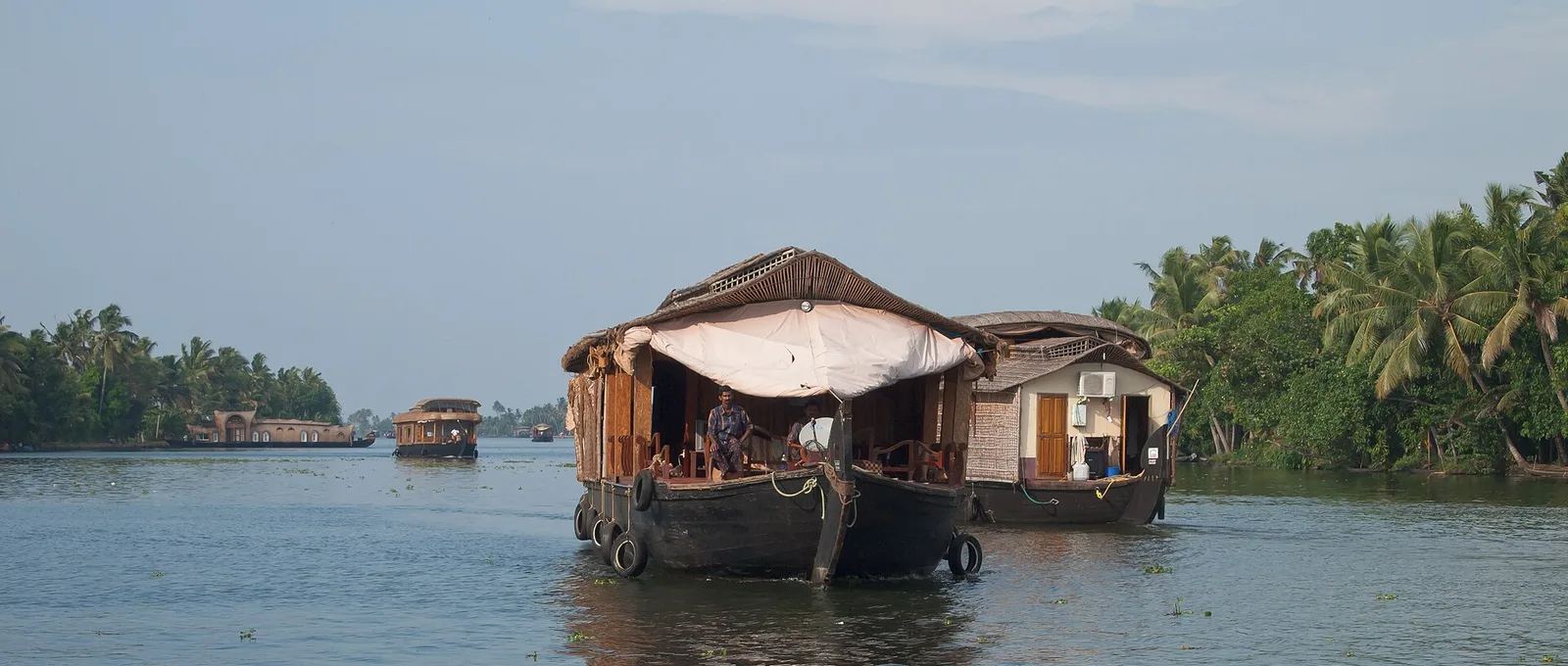
There are nine coconut palms on my aunt's land outside Alappuzha and they have not been harvested in three years. They are healthy. They fruit. The nuts fall when they fall, which is dangerous, and she has lost a section of roof to one.
The oil in her kitchen comes in a plastic pouch from a shop and a substantial share of what Kerala consumes is now pressed from copra brought in from outside the state.
This is not a price story, which is what I assumed for a long time. The farmgate price is not the binding thing. The binding thing is that nobody will climb the tree.
A palm needs harvesting about five times a year. Climbing one is a skilled physical act performed at fifteen to twenty metres with no equipment beyond a loop of rope, learned young, and it produces an income only if you do a great many trees a day in an area dense enough to walk between them. It was for generations a caste-associated occupation, low-paid and hazardous, and the sons and daughters of the people who did it have — entirely reasonably, and this is the part I will not have argued at me — gone and done something else. Kerala's literacy and its migration economy are the two things it is most admired for, and both of them work by making sure the next generation does not climb.
So the labour did not become expensive. It ceased to exist as a category. My aunt cannot get a climber at any price she has tried, and she has tried.
The obvious answer is the machine, and the machines exist. Kerala's agricultural university developed a mechanical climbing device more than a decade ago, and there have been subsidy schemes and training programmes for it, and I have watched a demonstration. The device works. A trained operator can do a tree in a few minutes and comes down safely.
Why has it not solved this? I went and asked people who had done the training, which is a thing surprisingly few of the reports appear to have done.
The device is not the constraint; the round is. To make a living with one, an operator needs a route — enough trees close enough together, harvested on a schedule, with the owners paying reliably. In a district where holdings are a third of an acre, that route has to be assembled from perhaps sixty separate households who do not know each other, half of whom have someone in the Gulf and are indifferent to a few hundred rupees, and a third of whom will want their trees done in a different week. Nobody assembles it. The training programmes trained individuals in a skill whose economics only work as a network, and then measured their success in individuals trained.
There is a second thing that everybody local knows and no scheme document I have read mentions. The traditional climber did not only harvest. He looked at the crown, took off the dead fronds, told you if there was rot, and knew which of your trees was in trouble. That is a diagnostic service bundled into a harvesting fee, and the machine operator, who is paid per tree and moving fast, does not provide it. Several people I spoke to had tried the mechanical service once and gone back to leaving the trees alone, and when I pushed on why, the answer was not the price. It was that the man used to tell them things.
I do not think that is nostalgia. It is an accurate observation that a bundled service was unbundled and only one half of it was replaced.
What would work is not another subsidy on the device. It is an aggregator — somebody, a cooperative or a private operator, who holds the route rather than the machine, contracts with the households on an annual basis, and employs the operators. That is a coordination job, not a technology job, and it is exactly the kind of thing the state has funded twenty schemes to avoid doing.
My aunt has decided to have three of the nine cut down. Not the far ones. The three near the house, because of the roof.

The unbundling observation — that the climber also told you things — is the part every mechanisation study I have read misses, because the diagnostic service was never priced and so never appeared to be lost.