
Human beings have always searched for ways to overcome death. Religion proposed an afterlife, medicine extended biological life, and modern technology has introduced a new possibility: digital immortality—the idea that a person's memories, personality, knowledge, and perhaps consciousness could continue to exist in digital form after the biological body dies.
Digital immortality remains hypothetical. No human consciousness has been successfully transferred to a computer. However, the concept is increasingly discussed within neuroscience, artificial intelligence, brain-computer interfaces, and computational biology.
The central scientific assumption is computationalism: the possibility that the mind is fundamentally the result of information processing performed by the brain. If this is correct, then in principle, the same information-processing processes might be reproduced using a different physical substrate, such as a computer.
The Scientific Basis
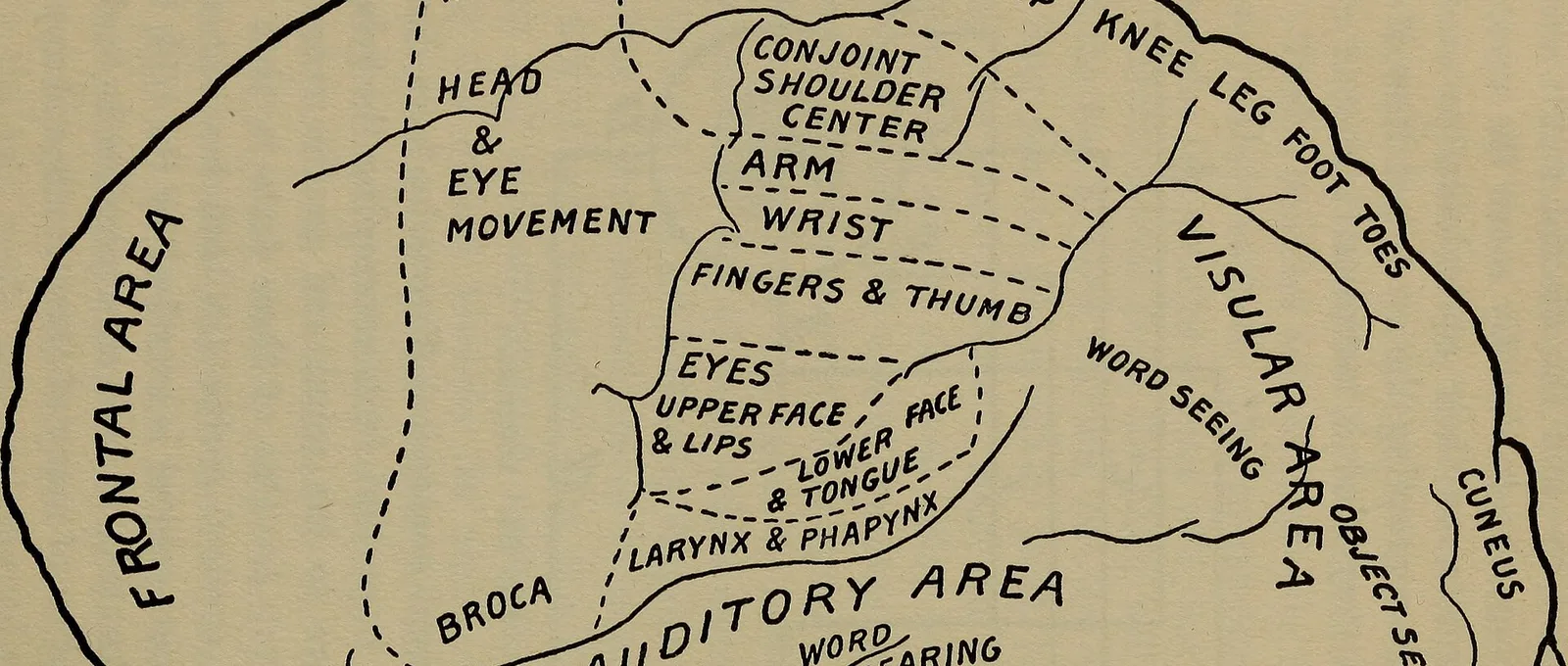
There is strong evidence that mental functions depend on physical processes in the brain. Damage to specific brain regions can alter memory, personality, language, perception, and behavior. Changes in neural chemistry can similarly affect cognition and consciousness. This suggests that memories and personality have physical representations in the brain. If scientists could measure those representations with sufficient precision, they might eventually be able to reconstruct them.
One proposed approach is whole-brain emulation. Researchers would scan a brain at extremely high resolution, reconstruct its neurons and connections, and then build a computational model capable of reproducing its activity. The scale of this challenge, however, is enormous. The human brain contains approximately 86 billion neurons and an estimated hundreds of trillions of synaptic connections. Furthermore, the brain is not simply a static wiring diagram. Synaptic strength changes continuously, neurons communicate chemically and electrically, and other biological processes influence neural activity. Therefore, simply creating a map of the brain may not be enough.
The Connectome Problem
A major research area is the connectome, the complete map of neural connections. The logic is straightforward: if memories and cognitive abilities depend significantly on neural organization, reconstructing that organization could provide the foundation for reconstructing a person's mind. But scientists do not yet know exactly how much information must be preserved. Some researchers argue that a sufficiently detailed structural map could contain most of the information necessary to reproduce an individual's mental characteristics. Others believe that additional information—such as molecular states, neural activity, and biochemical conditions—would also be necessary. This uncertainty is one of the largest obstacles to digital immortality.
The Identity Problem
Even if scientists eventually create a perfect digital replica of a person, a deeper question remains: Would the replica actually be the original person? Imagine scanning your brain and creating a digital copy containing all your memories and personality traits. The copy wakes up and remembers your childhood, family, and experiences. It believes it is you. But if your biological brain is still alive, there are now two individuals with the same past. From that moment onward, their experiences diverge. This suggests an important distinction between copying a mind and transferring consciousness.
A digital replica could potentially behave exactly like you while still being a separate conscious individual. Science currently has no method for proving that subjective consciousness has moved from one system to another.
Conclusion
Digital immortality is therefore best understood as a scientific hypothesis rather than an established technology. The evidence supporting its possibility comes from neuroscience, computational theory, connectomics, artificial intelligence, and rapidly advancing computing technology. Yet major unanswered questions remain about how memories are physically encoded, how much information must be preserved, whether consciousness can exist independently of biological tissue, and whether copying a mind constitutes personal survival. The most difficult question may ultimately be philosophical rather than technological:
If a digital system remembers your life, thinks like you, and believes it is you, is that system you—or simply your most accurate copy? Until science can answer that question experimentally, digital immortality remains one of the most fascinating—and uncertain—possibilities at the intersection of neuroscience, computing, and human identity.