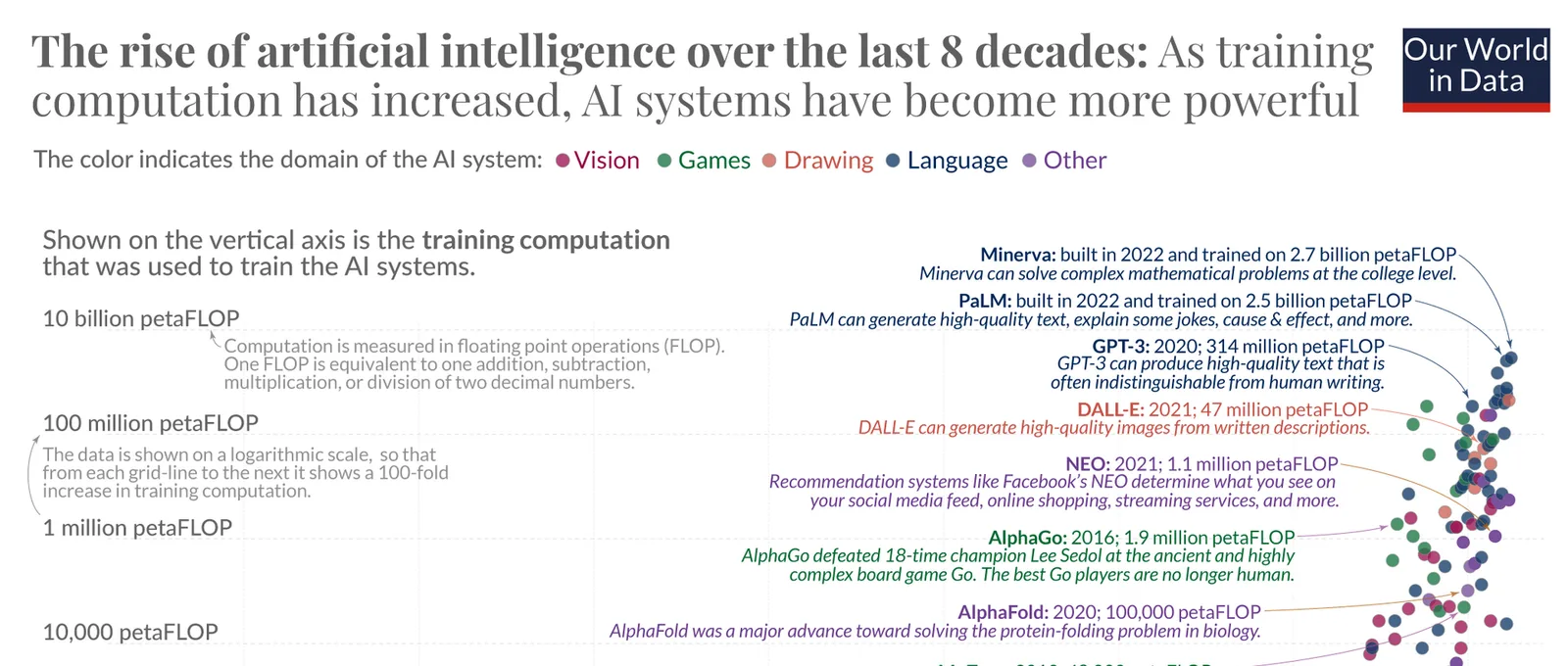

Artificial intelligence has moved from the pages of science fiction into the center of everyday life. Not long ago, AI was something most people associated with futuristic robots, research laboratories, or complicated computer systems. Today, it is helping people write emails, create images, analyze information, learn new subjects, write software, translate languages, plan trips, and even perform complex professional tasks. In 2026, artificial intelligence is no longer simply an emerging technology. It has become one of the most important forces shaping the modern world.
What makes today's AI revolution particularly interesting is how quickly it has developed. Generative AI tools have made it possible for ordinary people to interact with powerful computer systems using natural language. Instead of learning complicated software or programming languages, a person can simply describe what they want. AI can then generate an answer, create an image, summarize a document, analyze data, or help turn an idea into something tangible. This has dramatically lowered the barrier between people and technology.
Among the most popular developments is the rise of AI assistants. ChatGPT remains one of the most widely used generative AI platforms, while systems such as Google Gemini, Microsoft Copilot, Claude, and others have created a rapidly expanding competitive landscape. Research published in 2026 shows that consumers increasingly use generative AI as an "answer engine"—a way to find information, create content, receive recommendations, and solve everyday problems.
But the most important change happening now may be the transition from AI that simply answers questions to AI that can actually perform tasks.
This new generation is often called agentic AI. Traditional chatbots wait for a question and provide a response. AI agents are designed to understand a goal, break it into multiple steps, use digital tools, and work toward completing the task with less human intervention. In other words, the relationship between people and computers is beginning to change from "tell the computer what to do" to "tell the computer what you want accomplished."
That distinction could have enormous consequences.
Imagine telling an AI assistant, "Find the best flights for my trip, compare the options, check my calendar, prepare an itinerary, and show me the choices." Instead of answering each question separately, an agent could potentially carry out the entire process. In a business environment, an AI system might examine incoming emails, retrieve information from company databases, prepare a report, update records, and notify the appropriate employee.
This is why AI agents have become one of the most closely watched developments in technology. Google Cloud has described 2026 as a period in which AI agents are beginning to reshape business processes, while recent research and industry reports point toward longer, more complex tasks being delegated to AI systems.
The workplace is already changing because of this technology. AI is being used across industries for writing, programming, research, customer service, communication, data analysis, and administrative work. A recent study of organizational ChatGPT use, covering more than 1,500 organizations and over 17 million messages, found that AI adoption is spreading across different job functions and levels of seniority. The researchers also found that common uses include writing, technical work, communication, and information synthesis.
For workers, this creates both opportunity and uncertainty.
One of the biggest questions surrounding AI is whether it will eliminate jobs. The answer is more complicated than either extreme suggests. Some tasks that previously required human labor can already be automated or completed much faster with AI. At the same time, new jobs, responsibilities, and businesses are emerging around AI. The more realistic future may therefore be one in which AI changes the nature of many jobs rather than simply making humans unnecessary.
A person who knows how to use AI effectively may be able to accomplish what previously required an entire team. A small business owner can use AI to create marketing material, analyze customer feedback, draft business documents, build software prototypes, and research competitors. A student can use it as a tutor. A programmer can use it as a coding partner. A designer can use it to explore hundreds of visual ideas. A researcher can use it to organize enormous amounts of information.
This does not mean that human skills are becoming irrelevant. In many ways, they are becoming more important.
AI can generate an impressive answer, but it can also make mistakes. It can misunderstand a question, invent information, rely on flawed assumptions, or produce something that sounds convincing while being completely wrong. As AI becomes more powerful, the ability to evaluate its output becomes just as important as the ability to generate it.
This creates an important principle for the AI era: AI should increase human capability, not eliminate human judgment.
Trust is particularly important as AI moves toward autonomous action. When an AI only suggests something, a person can easily reject the suggestion. But when an AI begins sending emails, changing records, making purchases, writing software, or operating other systems, mistakes can become much more consequential. Recent workplace research shows that many employees remain uncomfortable with AI acting independently and want safeguards such as monitoring, permissions, notifications, and human oversight.
There is also the question of privacy.
Modern AI systems can process enormous amounts of information, and people increasingly use them for personal and professional tasks. This makes it important to understand where information goes, how it is stored, who can access it, and how it may be used. Businesses must be particularly careful when employees use AI with confidential customer information, financial records, intellectual property, or internal documents.
Another major issue is misinformation.
AI can generate realistic photographs, videos, voices, and written material at an extraordinary speed. This can be beneficial for entertainment, education, advertising, and creativity, but it also makes it easier to manufacture convincing false information. The ability to create something does not automatically make that creation true.
This means the AI era will require a stronger culture of verification. People will increasingly need to ask not only, "Can AI create this?" but also, "Where did this information come from?" and "How can I verify it?"
Despite these concerns, the creative possibilities of AI are remarkable.
For centuries, creative tools have expanded what humans are capable of doing. The camera changed photography. The computer transformed graphic design. Digital audio transformed music production. The internet transformed publishing. AI is now becoming another layer in that progression.
A person with no formal design training can describe an idea and generate a visual concept. Someone who has never written a piece of code can create a prototype by explaining what they want. A writer can brainstorm ideas, reorganize a complicated argument, or explore different styles. A filmmaker can experiment with scenes that would once have required enormous budgets.
The most interesting question is therefore not whether AI is creative in exactly the same way humans are. The more useful question is what humans can create when their abilities are amplified by intelligent tools.
Education may be one of the areas most deeply affected.
A traditional classroom gives many students the same lesson at roughly the same pace. AI has the potential to provide something much more personalized. A student struggling with mathematics could ask an AI tutor to explain the same concept in five different ways. Someone learning a language could practice conversation at any hour. A student studying history could ask for explanations at different levels of complexity.
But education will also have to change its definition of learning. If an AI can write an essay in seconds, simply asking students to produce essays may no longer measure the skills teachers want to evaluate. Schools may increasingly focus on reasoning, originality, research, discussion, problem-solving, and the ability to critically evaluate information.
The same transformation is happening in business. Companies are discovering that purchasing an AI tool is easy; integrating it effectively into an organization is much harder. AI works best when it has access to reliable information, appropriate tools, well-designed processes, and clear boundaries. Businesses therefore increasingly need to modernize their underlying technology and data systems before they can take full advantage of more autonomous AI.
Ultimately, the future of artificial intelligence will not be determined solely by how intelligent machines become. It will also depend on how wisely humans choose to use them.
The technology will continue to improve. Models will become faster, more capable, more multimodal, and better at reasoning. AI will increasingly work with text, images, audio, video, software, and real-world data. Agents will become more capable of completing long sequences of tasks. The distinction between a traditional application and an intelligent assistant may become increasingly difficult to recognize.
Yet the most important part of this revolution is still human.
AI does not decide what kind of society we want. It does not determine what we value, what we consider ethical, or what responsibilities we owe to one another. Those decisions remain ours.
The greatest opportunity is not to build a world where humans compete against machines at every task. It is to build a world where intelligent machines handle more of the repetitive and complicated work while humans have more time and freedom to focus on judgment, creativity, relationships, discovery, and meaningful problems.
Artificial intelligence is already changing the world. The next chapter will be about something even more important: learning how to live and work intelligently alongside it.
And perhaps that is the real AI revolution—not machines becoming more human, but humans discovering new ways to become more capable with machines by their side.